In the modern manufacturing landscape, production line efficiency is everything. Every hour of plant downtime for machinery maintenance and cleaning translates into a loss of margins. Traditional methods such as sandblasting, the use of chemical solvents or pressure washers have obvious limitations: they require the disassembly of parts, damage surfaces and generate huge amounts of waste to be disposed of.
The engineering answer to these inefficiencies is called cryogenic sandblasting (or Dry Ice Blasting).
How does Dry Ice Blasting work?
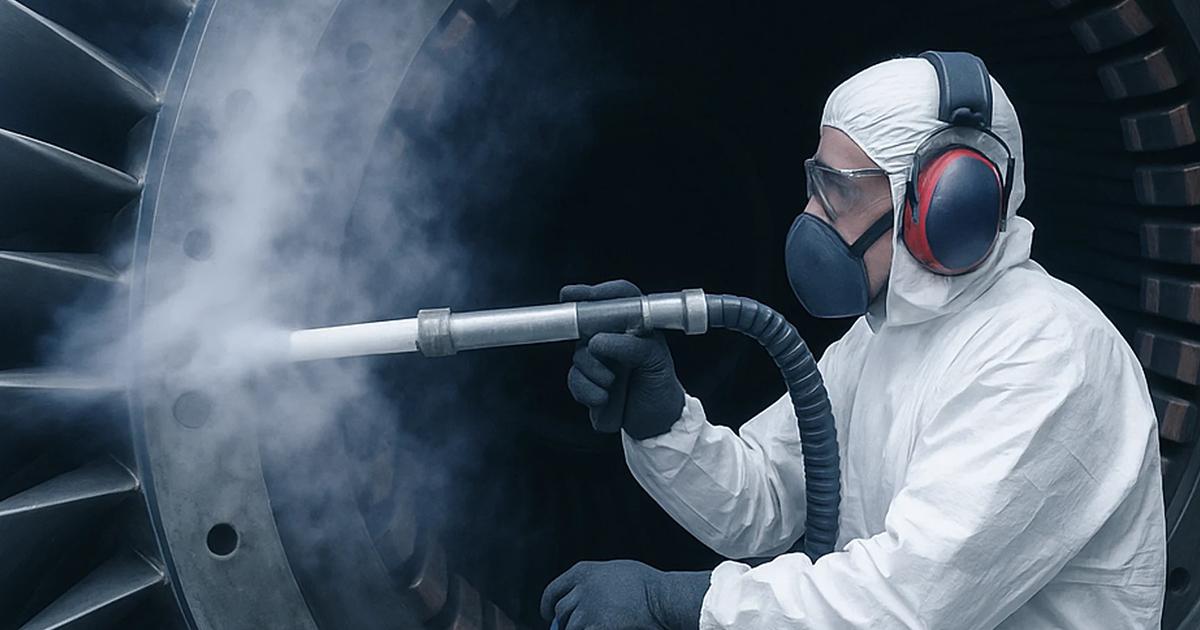
The process exploits solid carbon dioxide (dry ice) at a temperature of -78.5°C. Dry ice pellets are accelerated to supersonic speeds using compressed air and projected against the surface to be cleaned. The effectiveness of the system is not based on mechanical abrasion, but on three physical factors:
Kinetic Energy: The impact of the pellets breaks up the layer of dirt.
Thermal Shock: The extremely low temperature of the dry ice creates micro-fractures in the contaminant (grease, resin, glue or paint), making it lose adhesion to the underlying surface.
Sublimation (The Explosive Effect): Upon impact, the dry ice instantly changes from a solid to a gaseous state (sublimation), expanding its volume by about 800 times. This micro-explosion "lifts" and definitively removes the dirt.
Zero Residues, Maximum Safety
The real competitive advantage of cryogenic sandblasting is the total absence of secondary waste. Since dry ice sublimates into the atmosphere, the only residue that falls to the ground is the removed dirt, which can be easily vacuumed or swept.
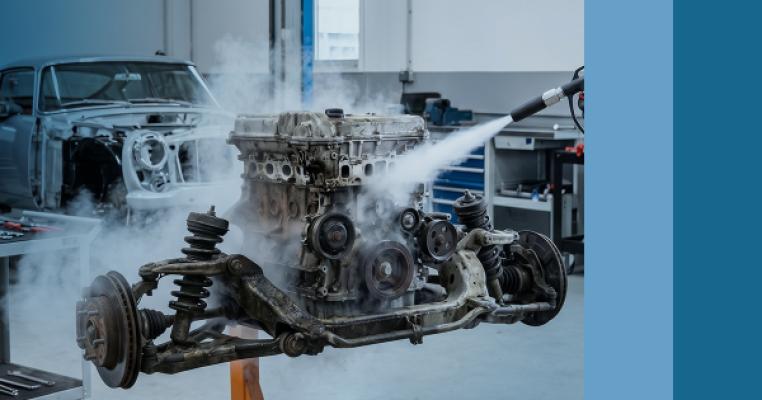
Furthermore, being a completely dry and non-conductive method, it allows the cleaning of motors, electrical panels, sensors and robotics directly on the production line (clean-in-place), without the need for disassembly or drying times.
Dry Ice Blasting is not just a cleaning technique: it is a strategic tool to optimize the TCO (Total Cost of Ownership) of your plants.